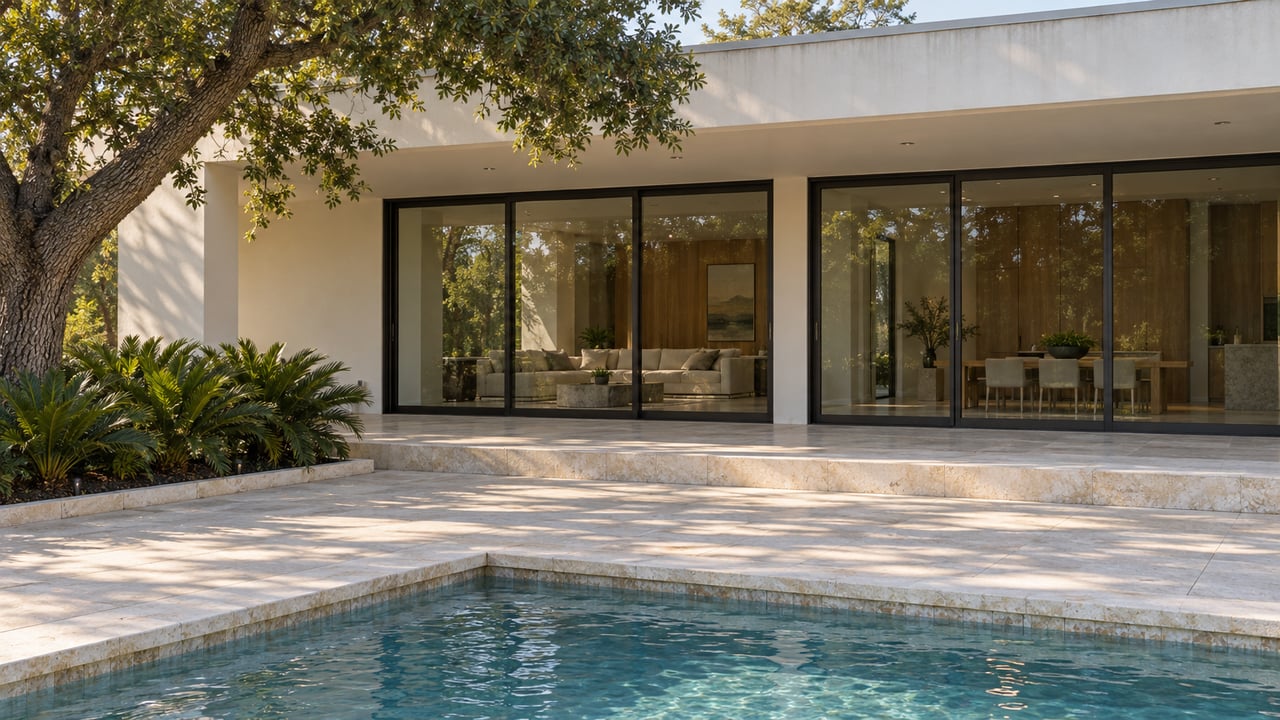
On the Butler Chain, Buying the View and Buying the Dock Are Two Different Approvals
October 1, 2026
October 1, 2026
A lakefront listing on Windermere's Butler Chain of Lakes usually settles one question in the buyer's mind before the second showing: do we have real access to the water. Deeded frontage, a private dock in the listing photos, maybe a slip assigned through the homeowners association. That part gets confirmed early, because it's the part everyone knows to ask about.
The part that surfaces later, sometimes at the inspection period and sometimes after closing, is that having the right to touch the water and having the right to build, repair, or modify anything on it are governed by two separate systems that don't check each other's work. A deed can grant frontage cleanly while the dock sitting on that frontage has no clean permit trail behind it. Both things can be true on the same parcel, and a buyer who confirms access and stops there has done half the diligence the Chain actually requires.
Riparian rights on the Butler Chain come in a few different forms, and the difference matters more than it looks on a listing sheet. Some lots carry private, deeded water access tied directly to the parcel. Others sit inside communities where the HOA owns and assigns the marina slips, which means the right to a dock can be a matter of waitlist position or transfer policy rather than a fixed feature of the property. A listing description that says "Butler Chain access" doesn't distinguish between these, and the language that controls is whatever the deed and the governing documents actually say, not the marketing copy built around them.
An 11-acre estate that came on the market in May 2026 offers a clean look at how this gets handled at the high end. The listing carries more than 440 feet of frontage on Cypress Lake, but it also calls out a separate parcel that includes a private community boat ramp, which is the property's actual route onto the rest of the Butler Chain. That's a seller's team drawing a line between the water in front of the house and the separately valuable right to reach the wider chain from it. At that price point buyers already know to ask the question. Lower down the market, the same distinction exists, it's just less likely to be spelled out for you.
Confirming access answers whether you're allowed near the water. It says nothing about whether you're allowed to build, expand, or repair a structure on it, and that's a separate approval running through a separate agency.
The Butler Chain was the first lake system in Florida to receive the state's Outstanding Florida Waters designation, granted in 1985. That status means any new dock, dock expansion, seawall work, or fill and excavation near the shoreline needs environmental review from the St. Johns River Water Management District in addition to whatever Orange County requires for a building permit. The two reviews don't run on the same clock and don't automatically share information, so a structure that satisfies the county's building code can still be sitting without a valid SJRWMD permit, or the reverse.
| Question | Who answers it | Where the record lives |
|---|---|---|
| Do I have the legal right to reach the water from this lot? | The deed, plus HOA governing documents where applicable | County property records and HOA files |
| Can I build, repair, or modify a dock or seawall here? | Orange County (building permit) and the St. Johns River Water Management District (environmental review) | Orange County's Environmental Protection Division; SJRWMD's permit search at sjrwmd.com |
| What construction standard does a new or repaired dock have to meet? | The Butler Chain of Lakes Advisory Board | Meeting minutes, filed through Orange County |
Orange County also allows lakefront owners to keep a vegetation-free access corridor of 30 feet or 20 percent of shoreline frontage, whichever is greater, without a separate permit. Clear beyond that corridor, or take out native shoreline trees, and a permit is required, and any dock has to sit inside that same corridor rather than wherever the best view happens to be. It's a rule that has nothing to do with financing or title and everything to do with whether the dock you're buying, or building, is where you're legally allowed to put it.
The body that actually writes those construction standards is one most buyers never hear about until a permit lands on its desk. The Butler Chain of Lakes Advisory Board traces back to the Windermere Water Navigation Control District, created by the Florida Legislature in 1963 and renamed in 2006 to better describe what it does. It has five members, appointed to four-year terms, and it meets the third Monday of most months at Windermere Town Hall. Beyond setting dock construction standards, the board oversees canal maintenance, coordinates the Butler Patrol that enforces boating rules across the chain, and weighs in on flood plain alterations along the shoreline.
None of that shows up on a walkthrough or a standard title search. It shows up when a dock permit gets routed through the board's monthly agenda, or when a seawall repair needs a construction standard the board has already set for that stretch of shoreline. For a buyer or seller working against a closing date, that's a monthly meeting schedule worth knowing about well before the inspection period starts, not after an offer to modify a structure gets stuck waiting for the next agenda.
Two properties can both carry the label "Butler Chain lakefront" and deliver noticeably different days on the water, because the chain's rules apply a uniform 300-foot no-wake buffer around every shoreline, dock, and swimming area, and what varies is how much open water sits past that buffer.
The narrow canal connecting Lake Tibet-Butler to Lake Butler, known simply as the Windermere channel, is idle-speed only along its full length. A homeowner on a canal lot can still ski or wake surf once they reach open water on Lake Tibet-Butler or Lake Butler, but getting there from a private dock means a slow transit through the no-wake zone first. A main-lake lot skips that transit. That difference in daily use is part of why main-lake frontage on Lake Butler or Lake Down consistently outprices canal-front lots that carry technically identical navigable access on paper. The premium isn't just about square footage or finish level, it's about how much of the chain a boat can reach without idling through a buffer zone first.
Permit timelines on any Florida development application changed in a way that touches dock and seawall work directly. An amendment to Florida Statute 125.022, effective October 1, 2025, gives applicants 30 days from the date of a county's Request for Additional Information letter to respond, with the option to request a waiver of that window in writing. On a dock or seawall permit that's already running two to four months through review, missing that 30-day response resets the completeness clock rather than simply delaying it.
The same statute limits how many times a county can come back asking for more information on an application certified by a licensed professional, and requires the county to offer a meeting before a third request. Read together, the amendment tightens the process on both sides. Counties have firmer deadlines to act, and applicants have less room to let paperwork sit before a project falls behind.
Confirming deeded access is the beginning of Butler Chain due diligence, not the end of it. Before writing an offer or listing a lakefront property, it's worth working through three things a title search alone won't surface. First, the deed language itself, not the marketing description, since that's what actually controls access. Second, the permit history for any existing dock or seawall, pulled directly from Orange County's Environmental Protection Division rather than taken on the seller's word, since a structure without a clean trail may need to be rebuilt to code before anyone can modify it. Third, whether access runs through a private, deeded easement tied to the parcel or through a community agreement that could shift if the HOA's policies change.
Does every Butler Chain address come with the right to build a dock? No. Some deeded lakefront parcels have never had a dock permitted on them, and building a new one still has to clear both county and SJRWMD review before it can happen.
Is an existing, permitted dock enough due diligence on its own? It's a start. The permit needs to match the structure currently on the property, since modifications made after the original permit was issued sometimes aren't covered by it.
What changed in October 2025 that affects timing? The amendment to Florida Statute 125.022 set a firm 30-day window for applicants to respond to a county's request for additional permit information, which shortens how much slack a stalled dock or seawall application has before its review clock resets.
If you're weighing a specific Butler Chain address, whether the deed language matches what the listing implies, or how a permit history might affect your timeline to close, Gwyn Picerne can walk through the specifics with you before you write the offer.
With a foundation built across fashion, insurance, and real estate, we bring creativity, strategy, and dedication to every client experience. Whether you're buying, selling, or investing, we're here to help you navigate your journey with confidence and care. Let’s turn your goals into success—together.