Selling A Historic Home In Sanford: The Approval Nobody Mentions Until Escrow
August 27, 2026
August 27, 2026
A pre-1930s home inside Sanford's Residential Historic District and a 2007 build out toward Celery Lakes can list at the same price. They will not close the same way.
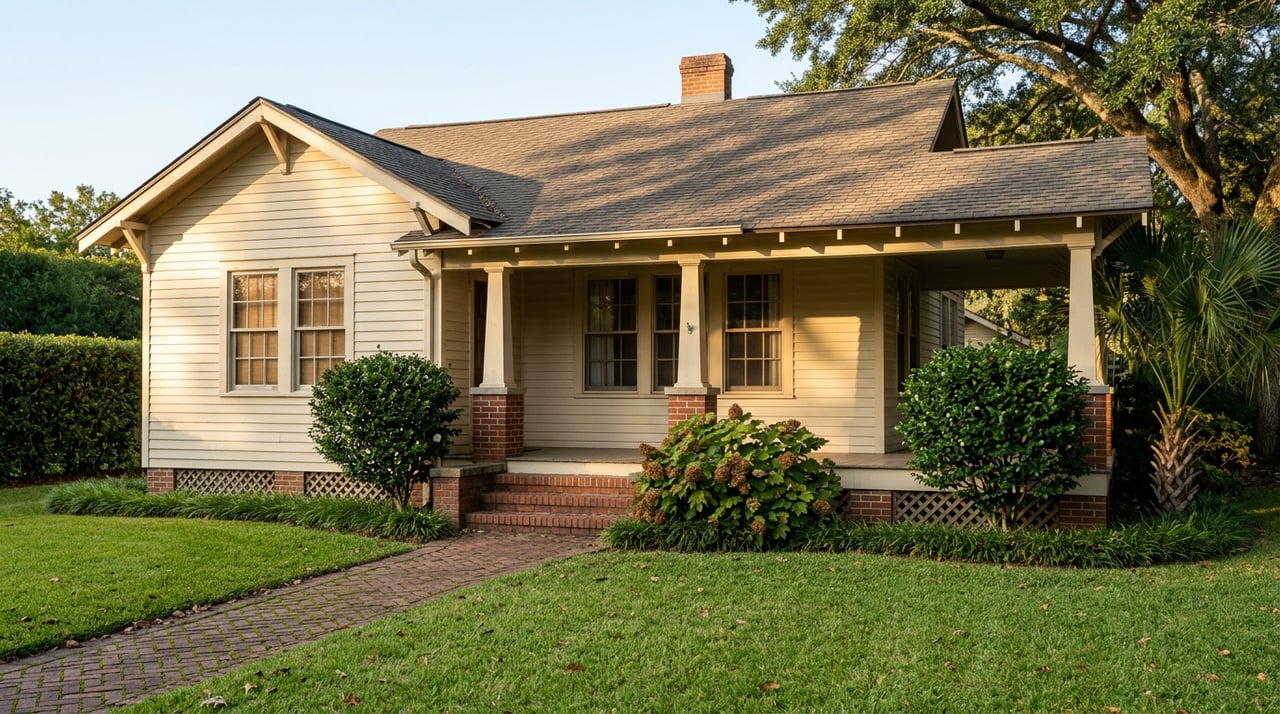
The historic home's seller may need a Certificate of Appropriateness before the buyer's inspector ever shows up. The newer home's seller almost certainly won't. That single difference, buried in city code rather than in any listing sheet, is the part of a Sanford sale that catches people off guard, not the charm, not the price per square foot, but the sequence of approvals a historic property has to clear before repairs even count as done.
Sanford has four locally designated historic districts: the Sanford Residential Historic District, the Georgetown Historic District, the Sanford Avenue Historic District, and the Downtown Commercial Historic District. All four sit under the authority of the same body, a seven-member Historic Preservation Board that meets once a month, on the third Wednesday, in city commission chambers.
Here's the part that surprises sellers: the board's reach isn't limited to additions or new construction. Any exterior work on a property inside one of these districts, including a routine repaint or a straightforward reroof, requires a Certificate of Appropriateness (COA) before the work begins. Applications go through the city's Citizenserve Portal, and the Historic Preservation Officer can be reached directly at (407) 688-5140 for a pre-application conversation before you commission any plans.
That monthly meeting cadence matters more than it sounds like it should. If a home inspector flags peeling paint or a roof past its useful life and the seller waits until under contract to address it, the fix itself might take a weekend. Getting permission to do that fix, if it changes the visible materials or color, can add weeks to a closing timeline that a buyer's lender is not going to wait around for.
The Sanford Residential Historic District alone covers roughly 432 contributing buildings in the grid bounded by Sanford Avenue, 14th Street, Elm Avenue, and 3rd Street, a mix of Craftsman bungalows, frame-vernacular cottages, and Mediterranean Revival homes dating mostly from the 1880s through the 1920s. Anyone selling inside that boundary is selling inside the approval process, whether the listing mentions it or not.
The city's own housing stock breaks into distinct eras, and each one carries a different inspection profile. A local inspection firm serving Seminole County lays out the pattern plainly: pre-WWII homes downtown, mid-century housing around Lake Monroe, and newer construction on the city's edges each demand a different kind of scrutiny.
| Era | Typical Systems | What Tends to Surface |
|---|---|---|
| Pre-WWII historic districts | Cast iron drains, galvanized supply pipe, lath-and-plaster walls, pier or crawlspace foundations | Knob-and-tube remnants, corroded supply lines, foundation settling |
| 1960s-1980s, Lake Monroe-adjacent | Slab construction, aging roofing and HVAC typical of the era | Roof condition, HVAC age, water intrusion common to Florida's humidity |
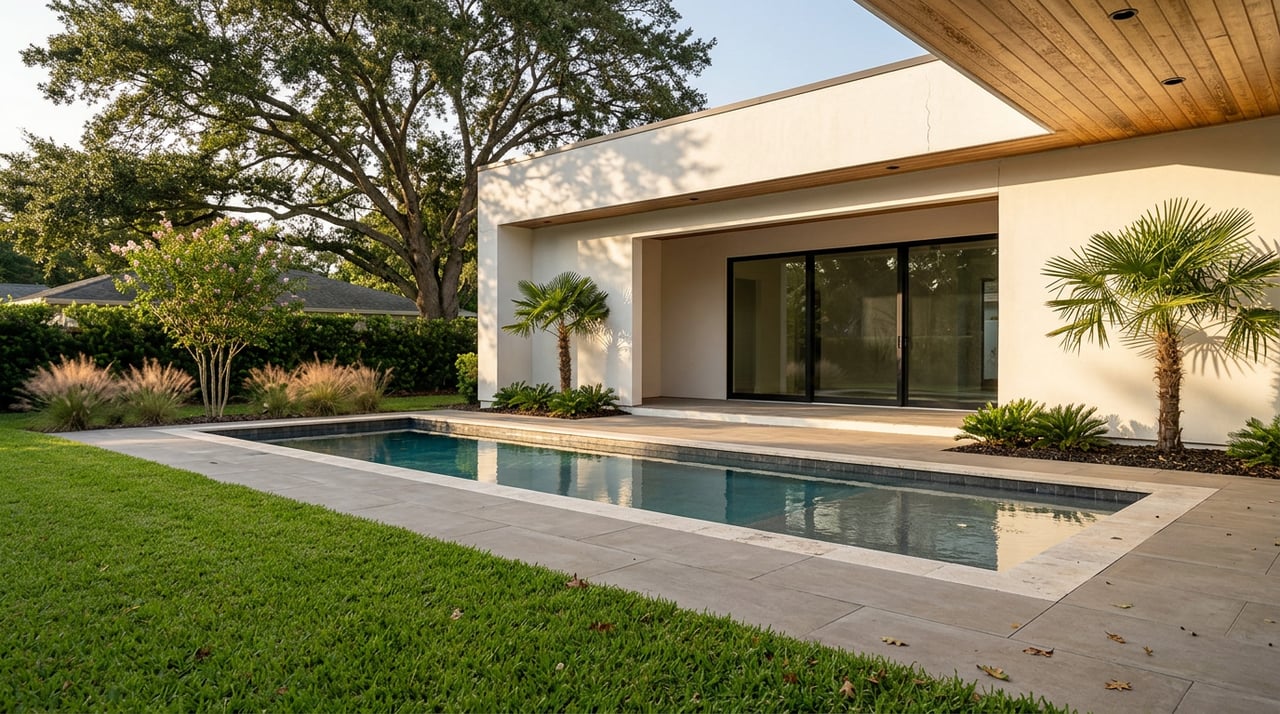
| Newer construction, like the Celery Lakes-era homes on the city's edges | CPVC supply lines, grounded wiring, drywall, slab foundations | Fewer systems flags, current code compliance |
A remodeling company serving the Sanford market put the contrast in concrete terms: two homeowners can choose the exact same quartz countertop and the exact same vanity, one in a 2007 Celery Lakes home and one in a 1912 bungalow in the Residential Historic District, and the bungalow project can run thousands of dollars more. The finish list is identical. What's behind the wall is not.
That's the mechanism most sellers don't see coming. It isn't that historic homes cost more to make beautiful. It's that the first phase of any project, whatever is hiding behind the plaster, decides the budget before the finishes are even chosen.
Buyers assume the moment of risk is the home inspection. In Sanford's older housing stock, the moment that actually derails a closing timeline is usually the insurance underwriting that happens quietly in the background while everyone is focused on the inspection report.
Florida's 4-point inspection, covering roof, electrical, plumbing, and HVAC, is required by most carriers for homes 20 years old or older, with Citizens Property Insurance holding firm at that threshold. A pre-1930s bungalow clears that bar by nearly a century. On the roof side, state law sets a floor: under Florida Statute 627.7011(5), an insurer cannot decline a policy for roof age alone while the roof is under 15 years old, and once it crosses that mark, the homeowner has the right to an inspection to prove at least five years of remaining life before an age-based denial can stand.
Electrical panels carry their own red flags. Federal Pacific and Zinsco panels, both common in mid-century construction and sometimes found in later rewiring jobs inside historic homes, are frequent reasons a policy gets declined outright rather than priced higher. Polybutylene plumbing draws the same treatment on the water side.
None of this shows up on a for-sale sign. It shows up three weeks into a contract when the buyer's insurance agent asks for a licensed electrician's letter confirming the panel is safe, or when a lender's underwriter wants a roof certification the seller assumed wasn't necessary because the roof "looked fine." A standard home inspection report is often not enough on its own to satisfy an insurer. What underwriters want is a separate, signed evaluation from a licensed electrician or a roofing contractor, and that document takes time to schedule.
Local inspection pricing in Sanford runs modestly on paper. Standard pre-purchase inspections start around $395, condo inspections around $295, and insurance-specific inspections like the 4-point and wind mitigation bundle start near $99 each or $175 together. Those numbers aren't the problem. The problem is what they trigger.
A seller who lists a historic-district bungalow without first confirming panel type, roof age, and pipe material is effectively listing an unknown. If the 4-point inspection turns up a Federal Pacific panel mid-contract, the buyer's insurance falls through, the buyer's lender pauses, and the seller is now negotiating a credit or a repair under time pressure, without the option of a Certificate of Appropriateness fast enough to help since the board only meets once a month.
Citywide, the market itself has been steady rather than frantic. Sales data tracked by Resideline puts Sanford's median closing price at $370,300 over the six months ending August 2026, with the middle half of transactions landing between $278,000 and $485,000. As of mid-2026, recent historic-district listings have clustered in the high $300,000s to low $400,000s, comfortably inside that citywide band. Historic charm in Sanford isn't commanding a dramatic premium right now. It's competing on the same terms as everywhere else in the city, which means a seller can't count on the character of the home to absorb a surprise mid-contract repair or a stalled insurance approval.
Does the Certificate of Appropriateness apply to something as small as repainting? Yes, inside any of Sanford's four historic districts. Routine maintenance that doesn't change materials or appearance is typically exempt, but a color change or a different roofing material counts as an alteration and needs board or staff approval first.
Will an older Sanford home automatically fail a 4-point inspection? No. Age triggers the requirement for the inspection itself, not an automatic failure. What actually causes denials are specific conditions: an active leak, a flagged panel brand, or corroded plumbing. A well-maintained century-old home can still pass.
How much lead time should a seller build in for exterior repairs in the historic district? Plan around the Historic Preservation Board's monthly schedule. If a repair needs a Certificate of Appropriateness, submitting well before you intend to list gives you a buffer instead of a bottleneck once you're already under contract.
Selling a historic Sanford home rewards a seller who treats the paperwork and the plumbing as one project, not two. Gwyn Picerne works these transactions inside the historic district and across Seminole County regularly enough to know which approvals need a head start and which inspection findings are routine versus deal-threatening. If you're weighing a sale in Sanford's historic core, let's connect and map out the timeline before a buyer's underwriter does it for you.
Real Estate
With a foundation built across fashion, insurance, and real estate, we bring creativity, strategy, and dedication to every client experience. Whether you're buying, selling, or investing, we're here to help you navigate your journey with confidence and care. Let’s turn your goals into success—together.